Glossary
Dotted-line reporting vs. solid-line reporting
Dotted-line reporting is a secondary reporting relationship: an employee reports to one line manager on a solid line, and additionally to a second manager for particular work, such as a project or a specialist area. The solid-line manager handles appraisal, pay and leave; the dotted-line manager steers the content of the work.
What is the difference between a solid line and a dotted line?
The solid line is the formal reporting relationship. The solid-line manager hires, sets objectives, writes the appraisal and approves leave. Every employee has exactly one solid line.
The dotted line adds a second relationship for the work itself. A product manager may set priorities for an engineer whose line manager is the head of engineering; a country finance lead may report on a dotted line to the group CFO. The dotted-line manager has influence on the work but not on the employment relationship.
When does dotted-line reporting make sense?
Dotted lines are typical for matrix organizations, cross-functional projects and specialist roles spread across locations, such as finance or HR business partners. They make sense when someone’s daily work is directed by a person other than their line manager, and that should be visible to everyone.
How do you draw dotted-line reporting in an org chart?
Keep the solid line to the line manager as it is and add a dashed line from the employee to the second manager. The chart stays readable as long as the dotted lines are the exception. In mivochart, add the second person under dotted-line managers in the side panel; up to eight are possible, but more than one or two per person is usually a sign the structure needs explaining in words.
- Draw the dotted line in a lighter or different colour so it does not compete with the hierarchy.
- Never replace the solid line with a dotted one: every person needs one line manager.
- Explain in the legend what dotted lines mean in your organization.
What goes wrong with dotted lines?
The typical problem is unclear priorities: when both managers ask for different things, the employee is stuck. Agree in advance who decides in a conflict, usually the solid-line manager for capacity and the dotted-line manager for content. On the chart, too many dotted lines turn the drawing into a web that nobody can follow.
Example: a matrix with dotted lines
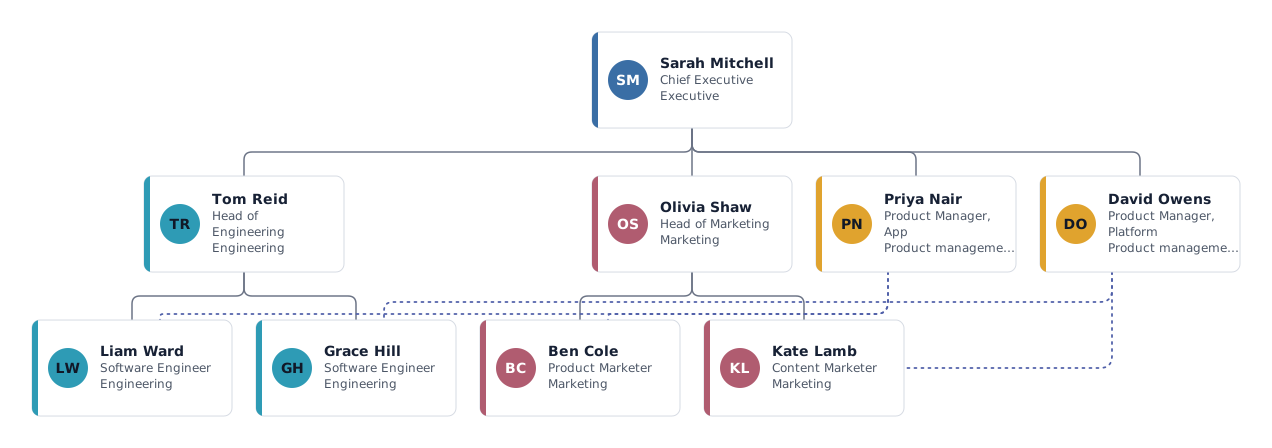
In this matrix example, two engineers and two marketers report on a solid line to the heads of engineering and marketing. Each of them also has a dotted line to one of the two product managers, who set the priorities for their product.
The term in other languages
| English | German | French |
|---|---|---|
| Solid-line reporting (line management) | Disziplinarische Führung | Lien hiérarchique |
| Dotted-line reporting | Fachliche Führung | Lien fonctionnel |
| Line manager | Disziplinarische(r) Vorgesetzte(r) | Supérieur hiérarchique (N+1) |
| Dotted-line manager | Fachliche(r) Vorgesetzte(r) | Responsable fonctionnel |
Frequently asked questions
What does it mean to have a dotted line to someone?
It means you work for that person on certain tasks and keep them informed, while your line manager stays responsible for your appraisal, pay and leave.
What are solid line and dotted line in German?
German speaks of disziplinarische Führung for the solid line and fachliche Führung for the dotted line. The managers are the disziplinarische and the fachliche Vorgesetzte.
What are solid line and dotted line in French?
French uses lien hiérarchique for the solid line and lien fonctionnel for the dotted line.
Can someone have two solid-line managers?
In most organizations no. Each person has one line manager; additional managers are drawn as dotted lines. Shared leadership exists, but it is then usually described in words rather than as two solid lines.