Which roles a startup org chart needs, and why
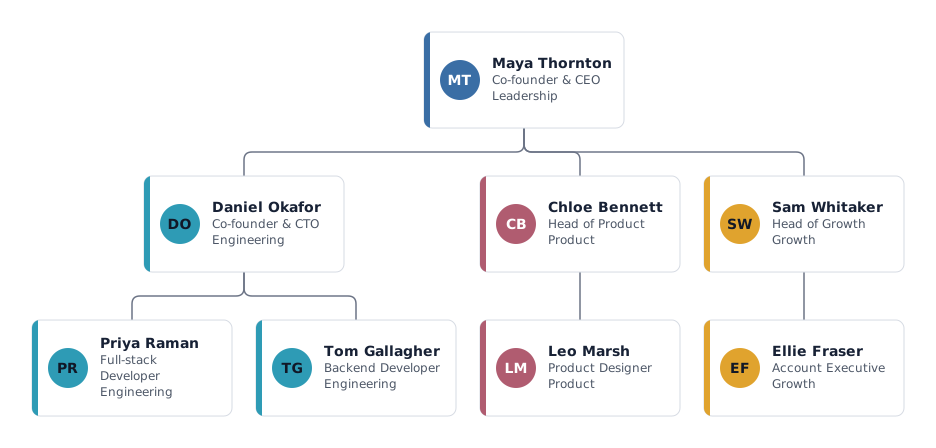
Early teams change every few months, so the chart is kept flat: everyone is at most two steps from the CEO. Each box stands for a responsibility, not a rank.
- Co-founder & CEO
- Owns the company direction, fundraising and hiring. Product, engineering and growth all report here, which keeps decisions fast while the team is small.
- Co-founder & CTO
- Runs engineering and the technical roadmap. The two developers report to the CTO, who usually still writes code. When the team passes six or seven engineers, this is where an engineering manager appears.
- Head of Product and Product Designer
- Product decides what gets built and in which order; design sits with product so research, flows and the user interface are owned in one place.
- Head of Growth and Account Executive
- Growth covers marketing and sales until each is big enough to split. The account executive closes deals; in a product-led company this seat could be a growth marketer instead.
Variations: from founding team to Series A
Two to five people
Keep only the founders and the first hires. Show what each person covers in the title field, for example "CTO, also DevOps", rather than inventing teams that do not exist yet.
Fifteen to forty people
Add team leads under the CTO (backend, frontend, data), split growth into marketing and sales, and add an operations or people lead who reports to the CEO. Departments get their own colour so investors can read the chart at a glance.
Tips for a startup org chart
Put planned hires on the chart
Mark a box as an open position. Board decks and hiring plans then show exactly which seats you are raising money for.
Show advisors and freelancers honestly
Give contractors a department of their own, such as "Freelance", or a custom field, so it is clear who is on the payroll and who is not.
Use a dotted line for dual roles
If the designer also works with growth on landing pages, add growth as a dotted-line manager instead of drawing a second solid line.
Keep it current from your HR export
Export your team list as Excel or CSV and re-import it. You see who joined, left or moved before the chart updates.
Questions about this template
Should founders appear side by side or one above the other?
Most startups put the CEO at the top and the other co-founders one level below, because one person signs and reports to the board. If you share the CEO role, put both names in one box and note it in the title.
When should a startup add middle managers?
A common rule of thumb is when one lead has more than seven or eight direct reports, or when the founders no longer have time for one-to-ones. Add the team lead box first and move people under it.
Can I show equity or salary on the chart?
You can add custom fields, but an org chart is usually shared widely. Keep confidential data out of charts you share with a link or embed in an intranet.
How do I share the chart with investors?
Export a PDF or PNG for the data room. Saved charts can also be shared as a read-only link.
Ready to put in your own names?
The template opens in the editor with the example people. Replace them by hand, or import your staff list and keep the structure.